
We4R: Strengthening Gender-Responsive Land Governance: P4T and GIZ–WE4R Conclude Successful BriGLAW County Engagements in Bungoma and Siaya
Siaya and Bungoma Counties
Climate Resilience and Peace and Governance

Pamoja for Transformation (P4T), in partnership with GIZ–WE4R, implemented a phase of the Bridging the Gap to Land Access among Women (BriGLAW) initiative across Bungoma and Siaya Counties. The coordinated engagements brought together county government officials, Government Land Agencies (GLAs), community leaders, women’s groups, and youth representatives to advance inclusive, equitable, and accountable land governance frameworks.
Bungoma County: Policy Orientation & Harmonization

Held in Bungoma, the two-day Policy Orientation Workshop focused on reviewing and refining the draft County Land Use Policy and Land Leasing Frameworks. Participants conducted a thorough gap analysis, identifying structural, cultural, and procedural barriers limiting women’s and youth’s access to land. Key outcomes included consensus on:
Harmonizing community- and youth-led leasing guidelines.
Strengthening monitoring and enforcement mechanisms.
Embedding gender-responsive language and affirmative action measures.
Promoting women’s meaningful participation in land administration bodies.
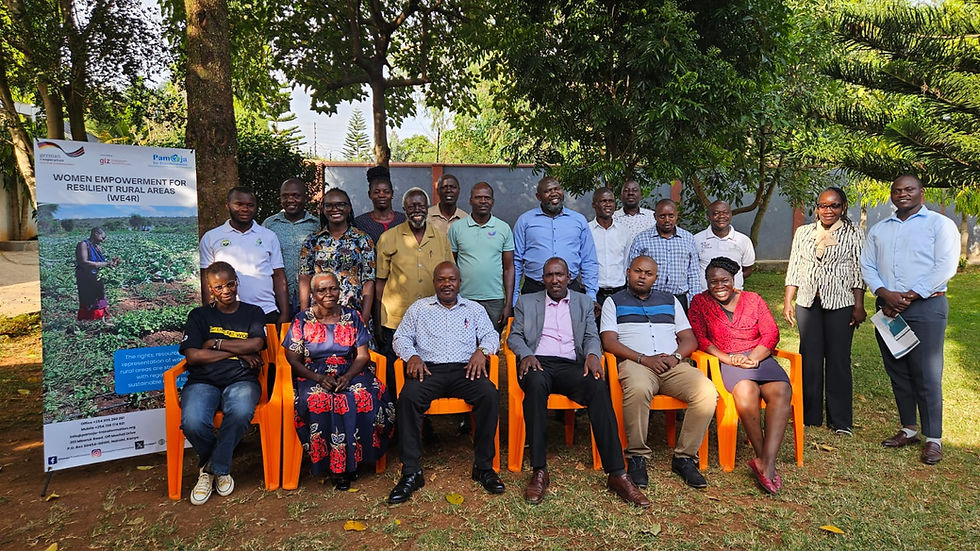
Gallery from the Bungoma Team,


Siaya County: Integration & Institutional Alignment
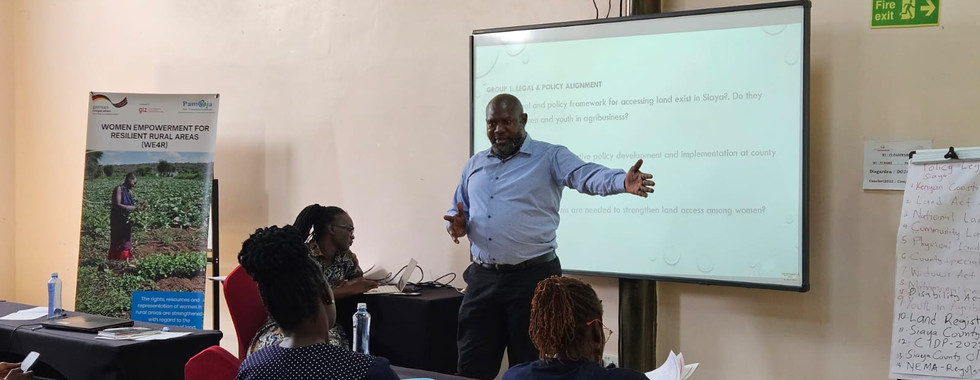
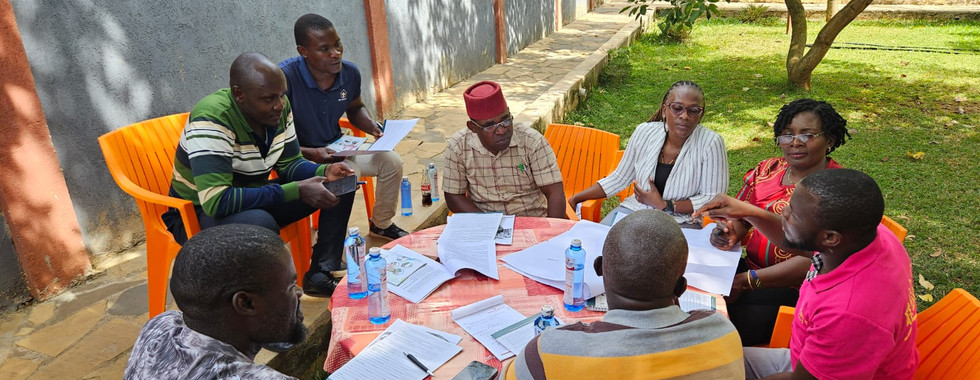
In Siaya, stakeholders convened for a Stakeholder Forum and Policy Development Workshop, aimed at integrating the BriGLAW-informed leasing guidelines into the Siaya Draft Land Management Policy. Discussions addressed institutional capacity gaps, inter-departmental coordination, and alignment with ongoing FAO-led land governance processes. Participants developed concrete action steps to:
Fast-track policy finalization and adoption.
Strengthening linkages between land, agriculture, gender, and youth departments.
Institutionalize community feedback loops in policy implementation.
Gallery from Siaya Team,







A Unified Vision for Inclusive Land Access
Across both counties, a strong, cross-sectoral commitment emerged: land governance must be not only legally sound—but also socially just. The engagements reaffirmed that sustainable development hinges on ensuring women, youth, and marginalized groups can access, use, own, and benefit from land—safely and equitably.
This milestone lays the foundation for continued advocacy, policy finalization, and pilot implementation under the BriGLAW initiative, with P4T and partners committed to supporting counties in translating dialogue into durable, transformative change.


